|
||||||||


 |
||||||||||
|
|
has published two novels, L.C., 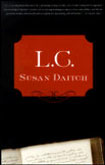 © Dalkey Archive The Colorist (Vintage), and a collection of short stories, Storytown. 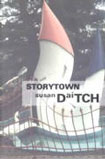 © Dalkey Archive Her short fiction has appeared in the VLS, Ploughshares, Gobshite, among others and been anthologized in the Norton Anthology of Postmodern Fiction, Avant Pop, and the Pushcart Prize 1998. Her writing was the subject of a young writers issue of The Review of Contemporary Fiction. Jnun in the Age of Metal
|
|||||||||

| * |
The next time the two met it was at La Pesce Qui Fuma, a tiny converted storefront restaurant located in a pocket of houses and apartment buildings mostly occupied by recent immigrants from South America. La Pesce was full of people. J.J. ordered a large bowl of soup, fiery orange chilies floating beside scallops, mussels, chunks of fish. The waitress, a woman in her late fifties with hair streaked a variety of reds and blacks, held back in a gold hair clip, was also the owner of La Pesce Qui Fuma. He was busy with one of his many immigration cases, and so Wolf had wanted to meet during lunch rather than his chambers. Above the small bar a television was tuned to CNN which was, for a moment, broadcasting the congressional hearings on the Chinese pirating of American software.
"Ugh, you call this luke warm garbage coffee? It's pishartz."
"Luz, come here." He called to a waitress who dutifully appeared at their table. "Do you call this coffee?" He held up the cup.
"Yes, what do you call it?" She answered in total bewilderment.
"Alright, I guess coffee is coffee." He twisted around to watch the television.
Washington is sending mixed signals to Beijing... Sanctions were proposed to punish countries continuing piracy of software, CD's, and other 'intellectual property.' At the same time Washington chose not to punish China for selling nuclear related equipment to Pakistan. The Administration has rejected calls from Congress and human rights organizations to use trade sanctions to retaliate for human rights abuses.
"Latif, listen to this, I'm talking to you. There's a lesson here, if not a moral." He returned to face the musician. "The Congressional hearings into China's most favored nation trading status are both a joke and a formality. The issue of human rights violations is raised, but only weakly. The issue of the pirating of 'intellectual property' is also raised, but it is impossible to halt or deter the duplication of software and smuggling rings which rake in billions of dollars in profit. Japan won't criticize China because of the atrocities committed in China by the Japanese army. The U.K. turns a deaf ear. There is a cover up of the counterfeiting because the government has just struck a free trade deal with China. If exposed... there is more at stake than a few videos.
"In other words this kind of thing goes on, and does so on a huge scale. There isn't much we can do about it. Everything gets copied somewhere along the line. The question is, recognition of and payment to the owner of the original materials."
"Material. I don't understand when material became materials. It's like calling money, monies."
"Do I have your attention or what? Am I talking to myself here? I suggest, again, Latif that you listen to me. Who is this Spike person? The Frank Sinatra of heavy metal? I don't think so. He isn't even the Tom Jones." He paused for a minute, looking back at the television. "It's not unusual to be loved by anyone," Wolf sang. Now Latif turned and looked at the booth behind them. Deep into their drinks or their lunches, no one was paying any attention to the bellowing lunatic opposite him.
"In a few years," Wolf continued, "he'll be back in England crying into his beer. No one will remember him except as some kind of joke, you know, like Tiny Tim. You know that guy, Jim somebody whose buried in Pere LaChaise Cemetery?"
"Jim Morrison." Latif knew this.
"Yeah, that's right. They want to kick him out of the graveyard because his fans come and paint graffiti all over the place, but no one will take him. He's like a floating garbage barge no one wants. My point is your Spike isn't even a dead Doornail."
"It was the Doors, J.J. And my point is this: he's loaded. Why should he get away with plagiarism even if he's a joke?"
"They should put all of these dead musicians in some kind of theme cemetery in Las Vegas."
Wolf shrugged dismissively. Before the Spike incident a club owner promised Latif that his music would become as popular and as understood as Nusrat Fatah Ali Khan's Sufi chanting, for example, which sold out Radio City Music Hall, and like Nusrat he would make a fortune. He dreamed of everything from movie soundtracks to sold out concerts all over the world. Gnawi is handed down within families, the way Wolf inherited his father's old Jan Peerce records. Imported from West Africa it's said to have healing powers. Those who listen find themselves cured of scorpion stings and psychic disturbances. Latif watched all kinds of people fall happily under the mystical, ecstatic influence of gnawa trance music and dancing. Spike, even in his perverted version, was stealing from him.
Latif had thought that by recording his music something good would happen, people would pay him for concerts. He could quit driving a cab.
"OK," Wolf said spearing a shrimp. "If that's what you want. I think we have a case."
| * |
Spike denied the charges and litigation was begun. The English Mr. Spike with his thousand dollar haircut and body tattoos of barbed wire and bullet holes claimed Latif's charge of copyright violation was preposterous paranoid nonsense. He'd never heard of Latif Majnoun or gnawi music. He was making a fortune. Why should he bother with a cab driver who recorded music on weekends in a basement? After listening to some Dirty Spike recordings even J.J. who favored Tony Bennett, "the velvet Fog," Mel Torme, and show tunes recognized a version of Latif's music rendered jagged and ugly. Mr. Spike claimed, "It was my creative idea."
The first time Wolf saw Dirty Spike was at the trial, and he knew was in the presence of a man who thought everyone in the room recognized him. This made Wolf feel old and stupid. Spike didn't need to make eye contact with anyone. He was way above everyone else in the courtroom, and he moved as if in a bubble, as if even here, he desired—no needed—to be shielded from his adoring public. At the same time there was something pathetic, almost self-deprecating about him, and J.J. hoped the jury wouldn't be taken in by that air of studied nonchalance. This was not a self-effacing man. He walked with a sense of his own power, his ability to get what he wanted within the predictable but considerable perimeters of what he did want. Latif was transfixed by the private Spike, the thief, Mr. Screw You, buddy. His tight T-shirt revealed a carefully designed body created by a personal trainer despite Spike's professed disdain for gym culture. From up close Spike was a wrinkled Rock Star with acne scarred cheeks. He looked like a man who knew people would say of him: not a Mick Jagger, not a Johnny Rotten, Sid Vicious, not even David Bowie playing Andy Warhol. But those secret parts of Spike, hidden behind all kinds of zippers beckoned to thousands of girls with pierced body parts. He exuded an air of I've seen a lot in this world, but I'm interested in you and aren't you lucky to have my attention. There was something untouchable about him, and Wolf wanted to make him pay. He stayed up nights reading up on copyright law.
| * |
At the trial the similarities between Latif's tape when played beside Dirty Spike's CD presented difficult evidence to refute despite the glaring stylistic differences. An ethnomusicologist was called in to listen and to testify, and she confirmed J.J. and Latif's claims.
Spike's defense tried to establish his good character. There was, for example, no fur on the Dirty tour. He was an animal rights supporter who braked for squirrels. Latif had no idea what this meant. He thought endangered animals were creatures who threatened humans: lions, poisonous snakes, sharks. The point about Spike's humanitarian nature seemed like a joke that would surely backfire.
| * |
Spike had a driver/body guard, Chester Louie, who also attended the trail. With his shaved head tattooed with a crack down the center, Louie was hard to miss. Like his boss, he exuded an air of bored oblivion. He pulled at his chain like a leashed animal you know can hurt you, and you just pray his restraint holds until you can get as far away as possible.
"How does someone get a job like that?" Latif whispered. J.J. imagined the bald man being tapped on the shoulder while obsessively working out at a gym, lifting weights, gold and black kerchief tied around his head. The rumor was that he had been a personal trainer who offered a wide variety of services. Though thick set, there was an element of vanity to Louie, like Spike he was a man used to getting what he wanted in his own way. There was something delicate in his gestures: the way he uncapped a fountain pen and appeared to take a few notes in a little book. Latif was fascinated by the fringe of dark hair he'd allowed to grow at the base of his skull, and wondered aloud what would happen if you pulled the fringe of hair.
"He may be the one who passed a bootleg copy of gnawi to Spike." Latif conjectured. He believed the spirits owned the music, not himself, and when they made their presence known it was because the music had summoned them. Dirty Spike's concerts with hundreds of people going into trances was a terrifying thought.
"He looks like a man on steroids," Wolf had said, "How can he do that to his head? This is a guy capable of anything. Remember that name: Chester Louie."
When called to the stand the man's voice was slightly high pitched, inquisitive, yet assertive, like Peter Lorre without an accent or a trace of timidity. J.J. said of him that if accused of a murder Louie looked like the kind of man whose only defense could have been: look at all the people I didn't kill. Wolf had been reading about a German, a loyal Nazi, who saved several thousand Chinese from murder by the Japanese army. Yet he returned to Europe with no qualms about murdering certain other people. Called a hero in recent years, J.J. referred to this as the "look at all the people I didn't kill defense."
Part of Spike's defense was that he played in the North American rock tradition which borrowed from African music, therefore, certain similarities between his music and anything coming out of Africa were inevitable. His imitation of hip-hop talk reminded J.J. of Nixon making the peace sign with his fingers. Wolf reached for his water glass.
According to copyright law, J.J. had to show that the two pieces of music were strikingly alike, in other words, their similarities had to reflect intentional copying not just coincidence. The court found that the works did share several sequential notes as well as similarities in structure and rhythms, but the melodies and harmonies are quite different. In other words the packaging was so different, the judge failed to hear what was going on, or perhaps he bought Spike's story that they were so far beneath his consideration and so different that the notion he would rip Latif off was laughable. For whatever reason, they lost.
| * |
Spike's music could be heard everywhere, on the radio, in shops; he was a Dracula that couldn't be killed.
| * |
Latif picked Wolf up in his cab and they drove over the bridge and into Chinatown, near East Broadway, an edge of Manhattan, a far eastern part of Chinatown where tourists never wander. Tenements perched above noodle makers, herbal doctors, unknown, obscure businesses and bodegas, all open twenty-four hours a day. Already, though it was still daylight, dim electric bulbs could be seen in the recesses of sliver storefronts. The sidewalks were somewhat crowded, but on these blocks the borders between business transactions and private life might be very slim. Latif liked this part of the city because everything happened right out on the street.
"What's hidden: gambling, prostitution, Tongs, gangs," Wolf said, "you don't want to know about it. But if you know where and how to look, what you see has a close relationship with what you don't see. More is visible to the naked eye than you might imagine. You got opera singers here who spend days as waiters or seamstresses.
"There was a case I read about recently involving those companies," Wolf said. As if distracted he pointed across the street to a sliver store, Wu's Video, a shop which sold and rented martial arts movies. Its windows were covered with posters of Jackie Chan, bare chested in black trousers, about to strike and other stars of Hong Kong cinema whose names neither of them knew.
"Ever see one of these videos?" He pretended to speak idly about unrelated themes.
Latif nodded. He had no idea what J.J. was talking about.
"So you know the quality of the tapes is pretty much sub par. You may very well ask me: Who cares?" Wolf posed a question Latif knew he was going to answer. "Let me tell you about piracy of 'intellectual property,' an enormous black market of CD's, video, and software. Counterfeit software is easy to produce, but the package labels which must be exact in order to pass, are not."
Wolf talked on and on. Finally he ran out of steam. An awkward silence followed. Wolf believed the law ought to have worked in Latif's favor. Even he could hear the similarities between the two pieces. Spike's defense team, though well paid, shouldn't have been able to win.
"We counted on pie in the sky that may never happen. Latif, look, as regards certain monies, let's say the allocation of certain monies. Do really think you/I/we have a claim on those monies? No. You can't spend monies you haven't won or earned. Just keep recording and eventually you'll get recognized." Wolf didn't actually believe this, but felt he had to say something.
| * |
Wolf's car was parked in a dark space between streetlights the city had on a timer system to save money. It was shadowy, but he wasn't apprehensive in a neighborhood he knew well. Next door to the jewelry store was a small music shop whose owner Wolf had known for years, but despite their long friendship he still refused to take the Dirty Spike poster out of his window when J.J. asked him to. Bizness, he learned, was bizness.
"What do I know about such dreck? I compete against the big chains. You know that," he had argued. He had no choice but to give people what they wanted. Although J.J. felt a little guilty when he walked past the dusty shop whose inventory shrunk every week, he couldn't bring hiself to patronize his store again.
At the corner Wolf saw Chester Louie get out of a car whose license plates read: DIRTY. He had a little girl with him, and they went into a pizzeria. The little girl was wearing flowered bell-bottom pants, and she had held the big man's hand as they crossed the street. J.J. sat in his car and watched the two of them eating slices at a counter facing a window. He wondered what Chester Louie who didn't seem like the kind of person who would know Nevins from Flatbush would be doing in this part of downtown, a man who could afford to take a child to the Plaza Hotel, Rumplemeyers, FAO Schwartz at least while the party that was Dirty Spike lasted. What would the bodyguard do when he was old and there was no more Spike? Perhaps he knew it would be over soon, and he was starting the pizza regime before it was too late. At least Latif had his sintar and his ne'er do well jnuns when they needed routing from their beds, but for the guardians of Metalage what would he have to retreat to? Wolf turned the key in his ignition and began the drive home where his neighbors were putting up crèches and reproductions of Santa's workshops complete with elves and reindeer. He turned the radio dial up and down, but could find nothing he wanted to listen to, and he had too many songs in his head.
© Susan Daitch